South Africa is a leading country in solar power, especially since Africa is the continent with the longest sunshine duration. In fact, Africa receives many more hours of sunshine during the course of the year compared to any other continent on Earth.
If we get a little technical and look at the numbers, Southern Africa has a high irradiation rate (the measure of solar potential). It ranges between 1,500 and 2,000 kilowatt-hours (kWh) per year. This means that the weather conditions in Southern Africa are better suited for solar. With most areas in South Africa averaging more than 2,500 hours of sunshine a year, it makes sense for us to use this solar energy to its potential. So, why not use it to drive water pumps?
In this article, we will explore solar energy in further detail and how it can be used for solar water pumps.
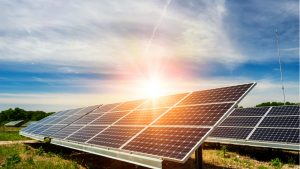
Understanding Solar Energy
Solar energy is radiant light and heat from the sun that is harnessed using a range of evolving technology. Simply put, solar energy is the transformation of heat (energy emitted from the sun). It is a method that has been used for thousands of years in many different ways.
There is solar technology available that converts sunlight into electrical energy. This can be done either through photovoltaic (PV) panels or through mirrors used to concentrate solar radiation. This energy is then used to generate electricity, or it can be stored in batteries or thermal storage. This is the ideal solution to help remedy the existing problem of electricity supply in South Africa.

There are several benefits of solar energy for the environment, namely:
- Reduces Air Pollution: Solar panels create clean energy that does not contribute to air pollution. However, fossil fuels create a lot of pollutants, which is dangerous for the environment and humans.
- Reduces Water Wastage: If your energy source is not using fossil fuels or solar energy to power itself, then it may be using water as its resource. Hydropower uses a lot of water to produce electricity; however, solar panels do not use water to generate energy and are the better choice for the ecosystem.
- Reduces Dependence on Non-Renewable Energy Sources: Using solar energy reduces our dependence on non-renewable energy resources, such as fossil fuels.
- Humanity's Health is Improved Over The Long-Term: Solar energy is clean energy. Cleaner air has a positive effect on humankind's health. In fact, it is estimated that using solar energy could save more than 25,000 lives.
- Helps Fight Climate Change: Solar energy does not emit CO2. By reducing our CO2 emissions, fewer pollutants are released into the air, which means we can do our bit to help slow down climate change and reduce our carbon footprint.
Other benefits of using solar energy include:
- It is available every day of the year; even cloudy days still produce some power.
- You will have a return on your investment - unlike paying your utility accounts.
- Very little maintenance is necessary since your solar panels can last more than 30 years.
- It can be installed almost anywhere, on a building or in a field.
- It is safer than a traditional electrical current.
- It is cheaper to generate power using solar energy than to pay for electricity provided by the council.
What is a Solar Water Pump?
A solar water pump pumps out water by using the sun's energy. It is made up of an electrical pump system in which one or more solar PV panels provide the electricity. A typical solar water pump system is made up of solar panels that drive an electric motor, which in turn powers a borehole or surface pump.
Below are the typical uses for solar water pumps:
- Fountain Pumps
- Transfer Pumps
- Swimming Pool Pumps
- Circulation Pumps in Ponds
- Providing Water for Livestock
- Irrigation Pumps
- Home/ Domestic Pumps
Types of Solar Water Pumps
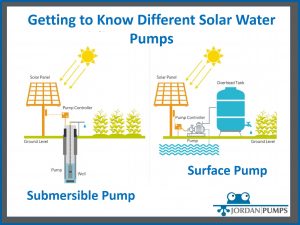
There are two main types of solar water pumps: surface pumps and submersible solar water pumps.
-
Surface Water Pump
This pump sits above ground and moves water through pipes. They are beneficial for moving large quantities of water at a slow pace. Surface water pumps are commonly found on farms or large irrigation systems where water needs to be moved from a body of water, like a lake, to fields or landscaping.
-
Submersible Solar Water Pumps
This type of water pump is installed underground, however, the solar panels are connected above the ground. The pump is used to move water from inside wells or boreholes to the surface.
Do You Need a Solar Water Pump?
Contact Jordan Pumps - the agricultural pump specialist - if you want to purchase, install, or maintain a solar water pump. Established in 2002, Jordan Pumps offer a full range of agricultural, domestic, and commercial pumps that include borehole, submersible, centrifugal, pressure, swimming pool, solar, solar geyser, and petrol pumps.