Modern agricultural irrigation is a complex system of sustainable energy consumption, market conditions, water use, and the application of experience and knowledge. It is a fine recipe to ensure the best design for agricultural irrigation applications.
If you want to build pumping systems that best serve the needs of today’s modern agriculture, then you should have an understanding of the following contributing factors:
- Past practices
- Current water issues
- Current energy issues
- New developments in water pump technology
With the agricultural market constantly changing, farmers cannot rely solely on the technology and practices of the past but should remain conscious of these factors. If farmers want to increase their productivity and remain competitive in the market, they need to focus on profitability. This includes energy optimisation and better use of existing water resources. Water pumping systems play a vital role in providing optimised solutions for energy and water use.
An agricultural pump system for modern-day irrigation is not only about the water pumps involved, but also the integration of components that make up the irrigation system. This includes intelligent control, remote management, and variable speed drives.

What is Irrigation?
Irrigation is the supply of water to crops or land to encourage and assist growth. Typically the irrigation is by means of channels. While irrigation encourages growth, it also plays a role in protecting the crops against damaging frost.
The Roots of Successful Agriculture
Successful agriculture depends on farmers having enough access to water. Unfortunately, in South Africa, water is not always a readily available resource as we experience sporadic bouts of drought. The right water source will encourage successful agriculture.
Farmers need to take into consideration energy consumption because the energy for irrigation is extremely vital. In fact, energy for irrigation water pumps is one of the highest single cost drivers for farmers. Unfortunately, many farmers are unaware or do not understand the potential savings from more efficient and effective energy use. The use of solar energy is the most readily accessible energy resource in South Africa.
Modern agriculture needs an irrigation solution that will:
- Optimise uniformity
- Minimise energy expenditure
- Safeguard the water resource
- Keep productivity efficient
What to Consider When Getting Water to the Crops
Irrigation begins with sourcing water for the crop. Water could come from:
- A groundwater source, like a water borehole.
- A surface water source
- A Channel
- A storage pond
Once you have found your water source, you need to consider water treatment and if it is necessary. You may also need to consider the addition of chemicals or fertilizers.
Finally, the water needs to reach the crop. Water can be delivered using several techniques, including:
- Drip/micros-spray applications
- Flooding
- Sprinkler irrigation
Sprinkler Irrigation
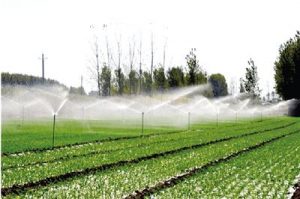
Mechanised sprinkler systems, for example, the pivot irrigation system, are effective for covering larger areas of land. Typically, these systems are attached to a water pump that can supply the right amount of water pressure and a control valve, which handles the excess flow and controls the pressure.

Drip and Micro-Spray Irrigation
Drip and micro-spray irrigation are typically used for low-pressure applications. The requirement of this type of system is to reduce as much potential evaporation and run-off as possible. An important factor is to keep the pressure constant to ensure a uniform application throughout each zone in the irrigation system.
If the drip and micro-spray irrigation system is properly managed, it can be one of the most energy-efficient irrigation crops. To achieve successful irrigation using this method, the system must be able to compensate for different variations in flow. This will ensure constant pressure as zones cut in and out.
The Challenges of Modern Agricultural Pump Systems
Many suggest that complete pumping systems instead of large, isolated pumps are the solution going forward. For instance, if you invest in pump controllers for effective pressure management, you can eliminate expensive and time-consuming pressure reduction valves. In the long run, you save money, reduce the need for services, and reduce your energy consumption.
The same can be said for the use of valves in a sprinkler irrigation system. A more effective and efficient approach would be to use a variable speed pump and a pressure sensor on the pivot. This would automatically adjust the pump performance to match the needs of the pivot. The benefits of this approach include:
- Higher irrigation
- Uniformity
- Energy costs are reduced.
- The pump controller protects the water pump from dry-running or any power supply irregularities. Basically, the lifetime of your water pump is extended.
An Irrigation System for Modern Agricultural Applications
Farmers and agricultural water pump suppliers need to think about specific irrigation systems in a new and innovative way. In particular, they need to put their heads together to think about irrigation system design in the application. Essentially, water pumps need to be far more integrated with the rest of the irrigation system to ensure efficiency. This means that the pump must be designed in a better way to match the irrigation equipment – or the irrigation equipment should, instead, be designed to fit the water pump.
The range of pump applications for agricultural needs is varied, and there are several options. The main key to success is intelligent pump controls that have been specifically designed for each application. One must remember that a water pump should do more than simply deliver water to the pipes to be considered effective. Consider the following examples:
- Adding variable speed drives improves the efficiency of groundwater withdrawal when you pump directly into an irrigation system.
- Surface water intake and distribution can be improved by using multi-pump pressure boosting systems.
- Monitoring and control systems across all applications further safeguard the reliable flow of water because they protect the pump from dry-running, power supply irregularities, and motor breakdown.
All of these elements need consideration and should be fully integrated into the design to provide maximum benefits for a modern agricultural pump system.
The Bottom Line
The development of an agricultural irrigation system needs careful consideration of the entire irrigation system, and each component’s integration should be tailored to the application. This requires experience and knowledge and modern agriculture, in particular, requires a broader understanding of component integration. A successful irrigation system should:
- Ensure the farmer can respond to issues with energy consumption and water supply.
- Generate an increased profit.
Jordan Pumps specialises in agricultural water pumps, and we have the experience and knowledge to assist with modern agriculture requirements. Leave the design, supply, and installation to the professionals so we can help you make the most out of your irrigation needs.
Contact Jordan Pumps today!