Pump cavitation is one of the largest risks affecting the successful functioning and lifespan of your water pump. Unfortunately, it is an issue that plagues many industrial water pumps, and it can cause serious damage to the pump’s impeller while slowing down its overall effectiveness and pump flow. This article will take a deeper look into cavitation, and what types of cavitation exist.
What is Water Pump Cavitation?
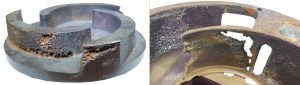
When rapid changes in a liquid create small, vapor-filled cavities where the pressure is low, then the process of cavitation occurs. These bubbles or cavities can collapse when placed into high-pressure water, which causes a shock wave that can damage the impeller. Basically, the changes in pressure cause bubbles, and when the bubbles increase in pressure and burst, they cause shockwaves within the pump. It is the shockwaves that wear down the pump’s impeller and body (volute) over time.
Given the small size and strength of the bubbles, one may be surprised that they can cause so much damage, and you may even be wondering how it is possible that bubbles bursting can wear down a metal impeller. The reason the process of pump cavitation is so damaging is that it affects the water pump over a long period of time. Cavitation does not affect the pump immediately; however, constant cavitation over a stretch of time will eventually have a negative effect on the metal impeller and cause it to be worn down by the bursting bubbles.
Symptoms of Pump Cavitation
Before you can jump to the assumption that your pump issues are related to pump cavitation, you need to know the symptoms of pump cavitation. Look for the following symptoms:
- Unusual Noise: The first thing you can look for is any unusual noise coming from your pump. You will hear a bubbling, almost cracking sound if you have cavitation. That is the sound of the bubbles bursting. You may also hear a rattling sound coming from the impeller housing. This sound is often described as “marbles bouncing around inside the pump.”
- Vibrating or Shaking: Cavitation can cause your pump to vibrate and shake. If your notice your pump shaking, then it may be the bubbles bursting inside the pump. The sooner you notice this and address the problem, the better.
- Decreased Flow and/or Pressure: If your water flow or pressure is decreasing, it may indicate pump cavitation.
- Increased Power Usage: Lastly, another symptom you can look for without opening the pump is whether your system uses more power than usual to move the impeller. If cavitation is causing the increased power usage, the bubbles will be slowing down the impeller, which means the motor needs more energy to operate the pump.
To completely rule out the issue of cavitation, you will need to do a complete inspection of the pump’s internal parts. Look for:
- Signs of erosion.
- Small parts of the impeller that may have broken off inside the pump.
- Damaged or leaking seals and bearings.
Types of Pump Cavitation
There are five types of water pump cavitation. Let’s take a look at them in further detail.
Vaporisation
Vaporisation is the most common type of pump cavitation. It is often referred to as inadequate NPSHa cavitation or classic cavitation. Vaporisation occurs when the liquid inside the water pump passes through the suction side of the impeller, which has lower pressure. This results in bubbles. Once the liquid passes through the impeller, the bubbles will cavitate when they are exposed to high pressure. This will result in shockwaves. Because this process can happen easily, vaporisation is a common problem.
Internal Circulation
Another type of cavitation that occurs within the water pump is called internal circulation. This type is simpler than vaporisation and is often easier to avoid and fix, as long as you practice good pump maintenance. Internal circulation cavitation occurs when the pump discharge port doesn’t get enough liquid out at the correct rate. This means that any liquid that wasn’t discharged is recirculated back through the water pump. The recirculated liquid goes back through the high- and low-pressure points, causing high heat and velocity. The process results in cavitation bubbles that cause damage to your pump’s impeller.
A common cause for your water pump not discharging enough liquid is that the discharge port was left open while the pump was running.
Air Aspiration Cavitation
You may read the word “air” and wonder what air has to do with your water pump; however, you may be surprised to learn what air aspiration really means. Air aspiration cavitation occurs when air enters the pump due to a failing valve or a weak point like a joint ring. Once air is inside your pump, it has no option but to be pumped. Since it is not a liquid, the air creates bubbles inside the water when moving inside the pump. When the impeller spins, it causes the bubbles to burst, which causes damage to your impeller.
Turbulence Cavitation
Turbulence cavitation is almost self-explanatory; the turbulence caused by the pumping water creates bubbles and results in cavitation. Since the pump is always moving water around, you may question how you can avoid or fix turbulence cavitation. It is important to understand that the mere moving and pumping of a liquid is not enough to cause turbulence – it involves filters, pipes, valves, and other pump parts that are inadequate for pumping liquid to create turbulence. If your pump has parts that are not well-suited, then the liquid becomes turbulent and starts experiencing different pressures, resulting in cavitation.
To avoid this type of cavitation, make sure your water pump system is well-suited to handle your pumping needs. If you have the wrong parts, you risk exposing your water pump to cavitation.
Vane Passing Syndrome
Vane Passing Syndrome is another type of cavitation that can easily be avoided if you do the right research before buying a water pump. It occurs when either the impeller’s diameter is too big, or the pump’s housing has a coating that is too thick. Cavitation happens because there isn’t enough room in the pump body for the liquid to pass through. The smaller space for the liquid causes it to gain velocity and a decrease in pressure. The decreased pressure results in an increase in temperature, which leads to bubbles and cavitation.
This type of cavitation is easy to avoid if you purchase the right water pump and a system that meets your water pumping needs. We recommend consulting a professional when purchasing a water pump system. Contact Jordan Pumps if you want to buy the right water pump. They will assist you with the right water pump, installation, and maintenance to avoid cavitation.